

Prostate Specific Antigen (PSA) Blood Test
£75.00
-
Results within 24 hours
-
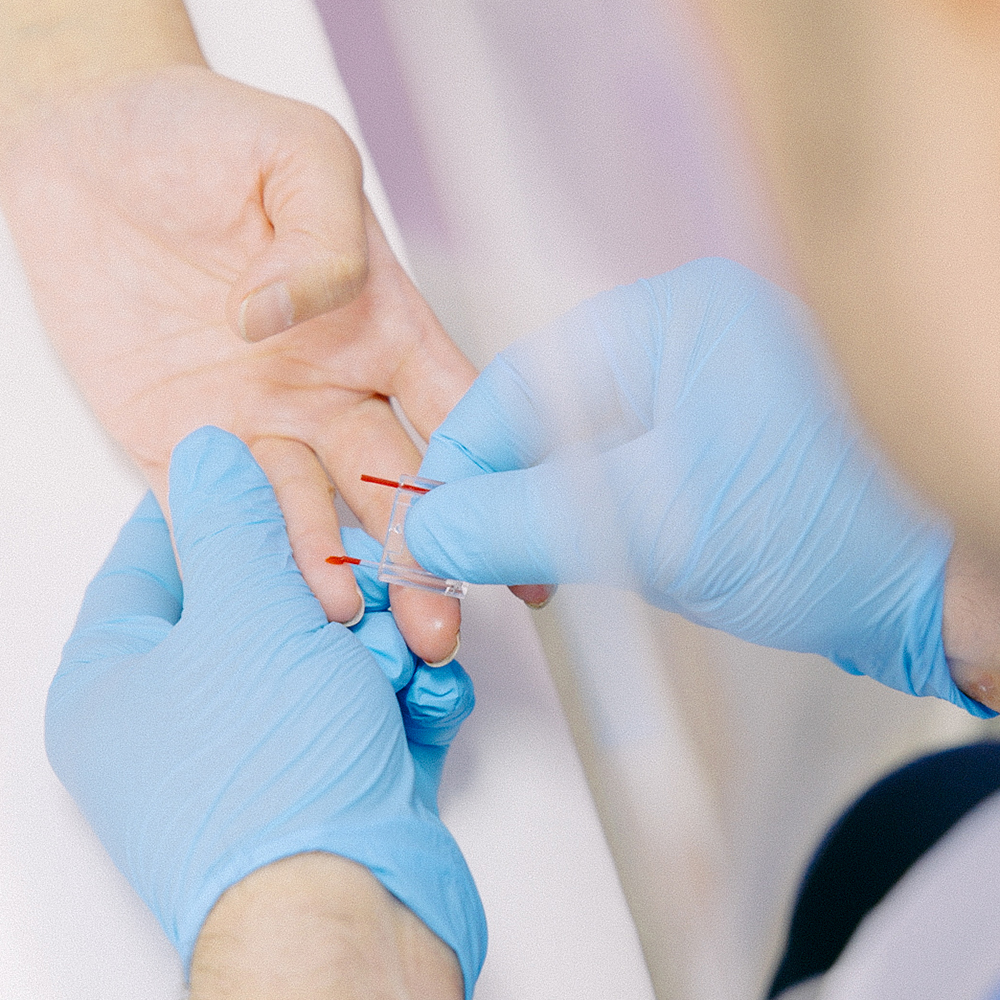
Blood draw included
Take a proactive approach to understanding prostate health with our Prostate Specific Antigen (PSA) Blood Test, a focused biomarker profile designed to assess prostate-specific antigen levels in the blood.
This test measures both total and free PSA to provide insight into prostate-related biomarkers. It is commonly used as part of routine health screening, ongoing monitoring of prostate health, or follow-up after clinical treatment.
It is important to note that PSA levels can vary due to several non-cancerous factors, and results should always be interpreted alongside clinical assessment.
What’s included
What is a Prostate Specific Antigen (PSA) Blood Test?
A PSA blood test measures levels of prostate-specific antigen in the bloodstream. PSA is a protein produced by the prostate gland, and changes in its levels can provide useful information about prostate health.
This test measures both total and free PSA, along with a calculated ratio to support clinical interpretation.
🩸 Prostate Health Markers
Who should consider this test?
This test may be suitable if you:
- Are monitoring prostate health
- Are undergoing routine health screening
- Have urinary or prostate-related symptoms
- Require follow-up PSA monitoring after clinical advice
- Are seeking preventative male health screening
What can affect PSA levels?
PSA levels may be influenced by several factors, including:
- Benign prostate enlargement (BPH)
- Prostatitis (inflammation of the prostate)
- Urinary tract infections
- Recent ejaculation (within 48 hours)
- Age-related changes
How to prepare for the test
In most cases, no special preparation is required before having a PSA blood test. However, certain activities may temporarily affect PSA levels and should be avoided for more accurate results.
- It is recommended to avoid ejaculation for 48 hours before testing, as this may temporarily increase PSA levels.
- Avoid cycling or prolonged bicycle riding for 48 hours prior to the test, as pressure on the prostate area may influence results.
- Avoid strenuous or exhaustive physical activity before testing where possible.
- Stay well hydrated before your appointment.
- Continue prescribed medication unless advised otherwise by a healthcare professional.
If you are unsure about preparation, please speak with a qualified healthcare professional before your test.
Why take a PSA blood test?
This test helps to:
- Monitor prostate health over time
- Detect changes in PSA levels
- Support early clinical investigation if required
- Provide baseline prostate health data
- Assist ongoing health monitoring
Early detection of changes may support further clinical assessment where appropriate.
Understanding your results
Your results provide a snapshot of PSA levels at the time of testing.
Raised PSA levels may be associated with:
- Benign prostate enlargement
- Prostate inflammation or infection
- Other prostate-related changes requiring further assessment
PSA testing is not diagnostic, and all results must be interpreted by a registered healthcare professional or physician.
How accurate is a PSA test?
- The PSA blood test is a widely used screening tool but is not a definitive diagnostic test for prostate cancer.
- PSA levels can fluctuate for several reasons, and both false positives and false negatives can occur.
- It is most effective when used as part of a broader clinical assessment.
What treatments may be used if PSA is raised?
If PSA levels are elevated, further investigation may be recommended by a specialist.
Possible treatment or management options may include:
- Active monitoring (watchful waiting)
- Hormone therapy
- Radiotherapy
- Surgery (prostatectomy)
- Chemotherapy (in specific cases)
All treatment decisions must be made in consultation with a qualified healthcare professional.
What can cause PSA levels to rise?
Do I need to prepare for the test?
Can this test diagnose prostate cancer?
How accurate is a PSA blood test?
Can medications affect PSA results?
What happens if my results are abnormal?
How often should I take a PSA test?
How long until i get results?
Trusted medical information and further reading
The information on this page is based on widely recognised clinical guidance used within UK healthcare systems.
For further reading and trusted medical information, please refer to the resources below:
- NHS – PSA test
- NHS – Prostate cancer
- NHS – Prostate cancer support and information
- Bioma – Health & Wellness
- Bioma – Male Hormones
These resources provide trusted, evidence-based clinical guidance used in UK healthcare and educational information to support understanding of prostate health and PSA testing.
-
B12 Vitamin injections
B12 hydroxocobalamin vitamin injections
View more details£25.00
-
Complete Health MOT Blood Test
Comprehensive Complete Health MOT Blood Test assessing 43 key biomarkers with professional blood draw included and fast results within 24 hours.
View more details£199.00
View details -
Male hormone blood test
Comprehensive 10 biomarker male hormone blood test including Hormones and Thyroid with professional blood draw and fast laboratory results within 24 hours.
View more details£160.00
View details

